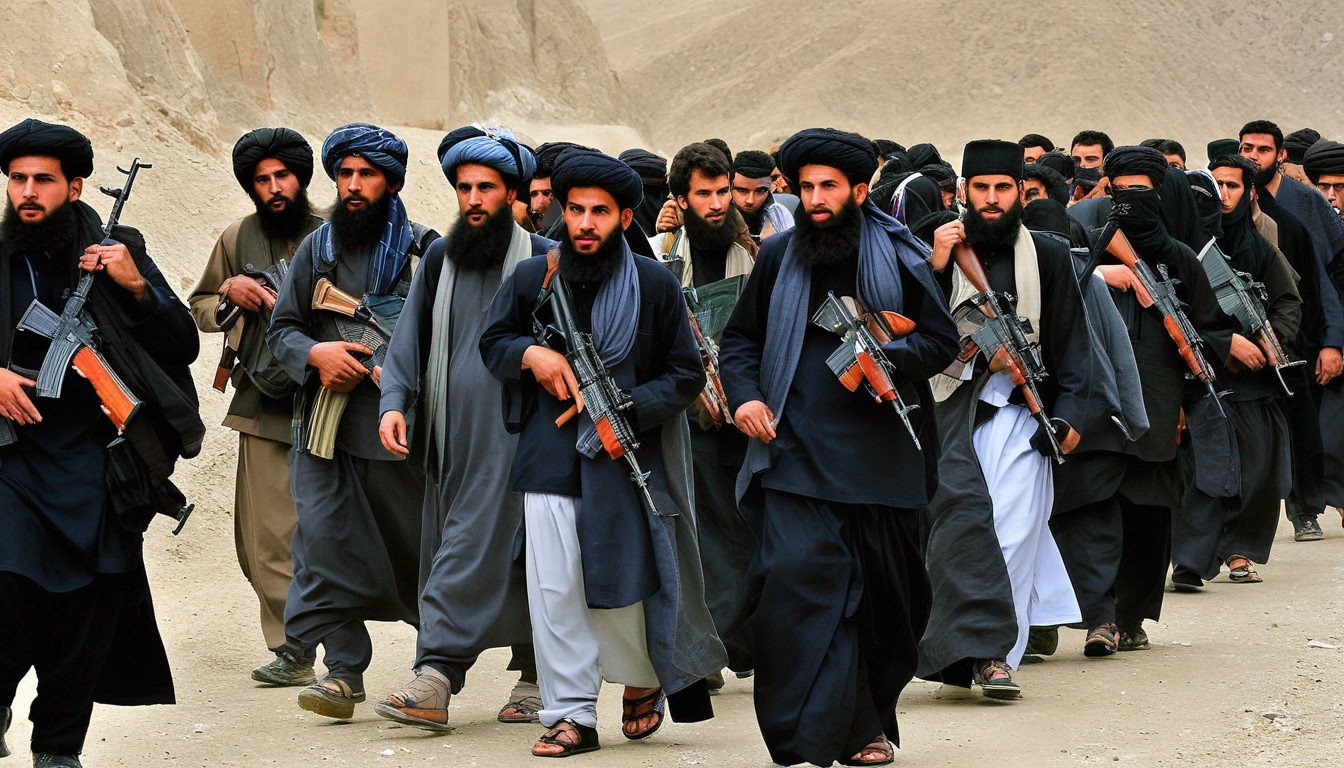
Taliban, Fanatism and Stereotype of Islam
Abstract
This study aims to explain and describe the correlation of the existence of the world's largest terrorist groups, the taliban, with fanaticism and its relation is the religion of Islam that they profess. The method used in this research is descriptive qualitative method, method that examines a phenomenon of the researcher’s subjects meanwhile the data collection method used is content analysis. The purpose of this method, which is a systematic research approach with documents as the data source, is to examine and discover the significance, position, and connection between a policy or new or existing program in order to ascertain the advantages of these things. Researching the content of a message, a book, and other materials is another way that content analysis is used. By using this style of study to gather data, the researcher concentrates on portraying the extreme religion that gave rise to the anarchistic group known as the Taliban. the results of the study found the linkage and influence of deobandi understanding which the taliban group adheres to with bigotry which gave birth to their acts of terrorism.
References
Ali, Z. (2006). Islam: Religion, History, and Civilization (review). Philosophy East and West, 56(3), 495–497. https://doi.org/10.1353/pew.2006.0030
Anugerah, B. O. Y., Purba, J., Amerika, S., & Pasifik, A. (2021). TALIBAN DAN SIGNIFIKANSINYA TERHADAP GEOPOLITIK GLOBAL Afghanistan ’ s Political and Security Conditions under Taliban ’ s Regime and Its Significances to Global Geopolitics Kepentingan. 9(3).
Chirico, A., Pizzolante, M., Borghesi, F., Bartolotta, S., Sarcinella, E. D., Cipresso, P., & Gaggioli, A. (2023). “Standing Up for Earth Rights”: Awe-Inspiring Virtual Nature for Promoting Pro-Environmental Behaviors. Cyberpsychology, Behavior, and Social Networking, 26(4), 300–308. https://doi.org/10.1089/cyber.2022.0260
Chouraqui, F. (2019). Fanaticism as a Worldview. Philosophical Journal of Conflict and Violence, 3(1) 455-458. https://doi.org/10.22618/tp.pjcv.20193.1.192002
Chung, E., Farrelly, F., Beverland, M. B., & Karpen, I. O. (2018). Loyalty or liability: Resolving the consumer fanaticism paradox. Marketing Theory, 18(1), 3–30. https://doi.org/10.1177/1470593117705696
D’Souza, S. M. (2016). Taliban: The Rebels Who Aspire to be Rulers. Journal of Asian Security and International Affairs, 3(1), 20–40. https://doi.org/10.1177/2347797015626043
Dauda, K. O. (2021). Islamophobia and religious intolerance: Threats to global peace and harmonious co-existence. Qudus International Journal of Islamic Studies, 8(2), 257–292. https://doi.org/10.21043/qijis.v8i2.6811
Doran, M. (2002). The Pragmatic Fanaticism of al Qaeda: An Anatomy of Extremism in Middle Eastern Politics. Political Science Quarterly, 117(2), 177–190. https://doi.org/10.2307/798179
Fuschillo, G. (2020). Fans, fandoms, or fanaticism? Journal of Consumer Culture, 20(3), 347–365. https://doi.org/10.1177/1469540518773822
Graaff, B. De. (2010). History of fanaticism : From Enlightenment to Jihad. History, May.
Gujarati, D. N., & Porter, D. C. (2010). Essentials of Essentials of Islam (Issue March).
Hardani, Hikmatul, A. N., Ardiani, H., Fardani, R. A., Ustiawaty, J., Utami, E. F., Sukmana, D. J., & Istiqomah, R. R. (2020). Metode Penelitian Kualitatif & Kuantitatif (A. Husnu Abadi, A.Md. (ed.); 1st ed., Issue April). Pustaka Ilmu.
Institute for Economics and Peace. (2019). Global Terrorism Index 2020 Measuring The Impact Of Terrorism.
Jansen, Y. (2011). Postsecularism, piety and fanaticism: Reflections on Jürgen Habermas’ and Saba Mahmood’s critiques of secularism. Philosophy and Social Criticism, 37(9), 977–988. https://doi.org/10.1177/0191453711416083
Khaled, F. (n.d.). ISLAM A Companion Book Compiled.
Lone, R. M., Naz, S., & Shukla, P. S. (2018). Women under Taliban Regime: A Theoretical Perspective. IJRAR1905208 International Journal of Research and Analytical Reviews, December. www.ijrar.org
Marimaa, K. (2011). The Many Faces of Fanaticm. ENDC Proceedings,. https://www.ksk.edu.ee/wp-content/uploads/2012/12/KVUOA_Toimetised_14_2_kalmer_marimaa.pdf
Moris, P. J., & Michael, L. R. (1970). Commission Report. AJN, American Journal of Nursing, 70(6), 1233. https://doi.org/10.1097/00000446-197006000-00015
Prakash, B. (2021). Afghanistan Crisis and The Global Impact with Effect to Taliban Take Over. October. https://doi.org/10.13140/RG.2.2.30569.21604
Rahman, M. M. (2021). Everything About The Shariah Law. Research Gate, December 2020, 1–25.
Rico, S. (2019). Fanaticism , Terrorism , Suicide Terrorism : Some Marcelian Perspectives. Marcel Studies, 4(1), 25–37.
Sahel, S. (2020). Taliban, Terrorism and War on Terror: Assessing US Involvement in Afghanistan. Kardan Journal of Social Sciences and Humanities, 1. https://doi.org/10.31841/kjssh.2021.39
Sugiyono, D. (2013). Metode Penelitian Kuantitatif, Kualitatif, dan Tindakan (19th ed.). alfabeta, CV.
Thomas, C. (2021). Taliban Government in Afghanistan: Background and Issues for Congress. Congressional Research Service Journal, 1–41. https://crsreports.congress.gov

This work is licensed under a Creative Commons Attribution-ShareAlike 4.0 International License.
Copyright
- The Author and each co-authors transfer the copyright and grant the journal right of publication with the work simultaneously licensed under an International Creative Commons Attribution and ShareAlike 4.0 License that allows others to share the work with an acknowledgement of the work's authorship and initial publication in this journal.
- Authors are able to enter into separate, additional contractual arrangements for the non-exclusive distribution of the journal's published version of the work (e.g., post it to an institutional repository or publish it in a book), with an acknowledgement of its initial publication in this journal.
- Authors should sign copyright transfer agreement when they have approved the final proofs sent by ISLAMIC RESEARCH prior the publication.
Author Guarantee
- The Author (Co-authors) guarantees that the Materials are an original work, submitted only to ISLAMIC RESEARCH, and have not been published previously.
- In case the Materials were written jointly with Co-authors, the Author guarantees that he/she has informed them of the terms of this Agreement and obtained their signatures or written permission to singe on their behalf.
- The Author guarantees as well that:
- The Materials do not contain libelous statements.
- The Materials do not infringe on other persons' rights (including without limitation copyrights, patent rights and the trademark right).
- The Materials do not contain facts or instructions that can cause damage or injury to third parties and their publication dose not cause the disclosure of any secret or confidential information
ISLAMIC RESEARCH is Published by Perhimpunan Intelektual Muslim Indonesia, and licensed under a Creative Commons Attribution-ShareAlike 4.0 International License.
Copyright ©2022.